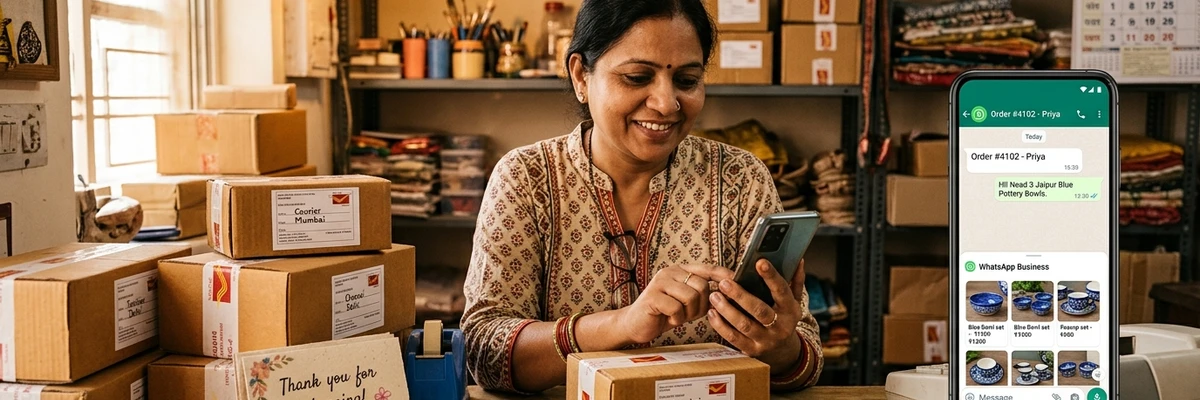
From idea to opening day: the planning, registrations and first steps for starting a small business in Kerala.
Starting a business is exciting, and a little overwhelming. The good news is that the path is fairly predictable. This guide walks through the main steps for starting a small business in Kerala, from choosing an idea to welcoming your first customers. Rules and fees change from time to time, so treat this as a roadmap and confirm the details with the relevant office or a qualified professional before you act.
Step 1: Choose an idea you can test cheaply
The best first business is usually one close to something you already know: a skill from your job, a trade in your family, a gap you have noticed in your neighbourhood. Before spending much, test the idea. Talk to ten likely customers, check what competitors charge, and try selling a small amount. If people are willing to pay, you have a start.
Step 2: Understand your customers and competitors
Walk around your area and look at similar businesses. What do they do well? Where do customers complain? Your opening advantage might be better service, a more convenient location, longer hours, or a more specialised range. Write down in one or two sentences why a customer should choose you.
Step 3: Write a simple plan and budget
You do not need a thick document. You need clear answers to a few questions:
- What exactly will I sell, and to whom?
- How much will it cost to start (deposit, fit-out, equipment, first stock, licences)?
- What will my monthly running costs be (rent, wages, power, transport, loan repayments)?
- How many sales do I need each month to cover those costs?
- How much cash do I have to keep going until sales build up?
Be conservative. Most new businesses take longer to become profitable than their owners expect, so plan for several months of low sales.
Decide how to fund it
Many small businesses begin with the owner's savings and help from family. Others use bank loans or government-backed schemes for small enterprises. Whatever you choose, borrow only what your projected cash flow can comfortably repay, and keep a reserve.
Step 4: Choose a legal structure
Common options include a sole proprietorship, a partnership, a limited liability partnership (LLP) and a private limited company. A sole proprietorship is the simplest and cheapest to set up. Partnerships and companies add structure and protection but also more paperwork and compliance. If you are going into business with others, put the agreement in writing, covering who invests what, who does what, and how profits and exits are handled.
Step 5: Complete the registrations and licences you need
The exact list depends on what you do, but most businesses should look into the following:
- Local body licence. Businesses generally need a licence or permission from their local self-government institution, the panchayat or municipality.
- Shops and commercial establishment registration with the Labour Department, if it applies to your business.
- GST registration. Mandatory above certain turnover limits and in some other cases; some businesses register voluntarily. Check the current rules.
- Udyam registration. A free online registration for micro, small and medium enterprises that can help with loans and government schemes.
- FSSAI registration or licence for food-related businesses.
- Sector-specific licences, for example for pharmacies, clinics, factories, or anything involving safety or the environment.
An accountant or a trusted advisor can save you time and expensive mistakes here.
Step 6: Open a separate business bank account
Keep business money apart from personal money from day one. It makes your accounts clearer, your tax filing easier, and your loan applications more credible.
Step 7: Set up your location and supplies
Choose a place that suits your customers: visible and convenient for a shop, affordable and practical for a workshop or office. Negotiate your rent and lease terms carefully. Order stock in modest quantities to begin with, and build relationships with reliable suppliers.
Step 8: Get your name out
Put up a clear signboard, share your opening with friends and family, and tell everyone what you do. Set up a Google Business Profile so you appear on Maps, and add your business to the ABC business directory. Collect your first reviews as early as you can.
Step 9: Keep records from the start
Record every sale and expense. Good records show you how the business is really doing, make tax time painless, and help you spot problems early.
Step 10: Find your people
Few new business owners succeed entirely alone. Join a local business community, ask questions, and learn from people who have been through it. Come along to one of our events, or get in touch with ABC Business Community to find out how to connect with other business owners in the Kanjirappally area.